
Visual clarity to drive science and innovation
The State Research Agency (AEI) is the public body attached to the Ministry of Science, Innovation and Universities responsible for promoting science and innovation through the funding of projects, people, and institutions. Its activity is structured through a broad range of competitive calls covering research projects, human resources, and institutional strengthening and collaboration initiatives.
In this context, at ingenyus* we carried out content adaptation and graphic design work to shape a dossier capable of organising, synthesising, and communicating this ecosystem of funding opportunities more clearly. The project focused on transforming extensive and technical information into a visually coherent, well-structured, and easy-to-consult piece, reinforcing its value as a communication and outreach tool.
content adaptation
The project was based on an extensive and highly specialised body of information. Our work consisted of reviewing, synthesising, and reorganising the content to build a clearer, more coherent, and easy-to-consult narrative. The key was to transform a complex set of calls into a tool that is understandable for different audiences connected to the science and innovation system.
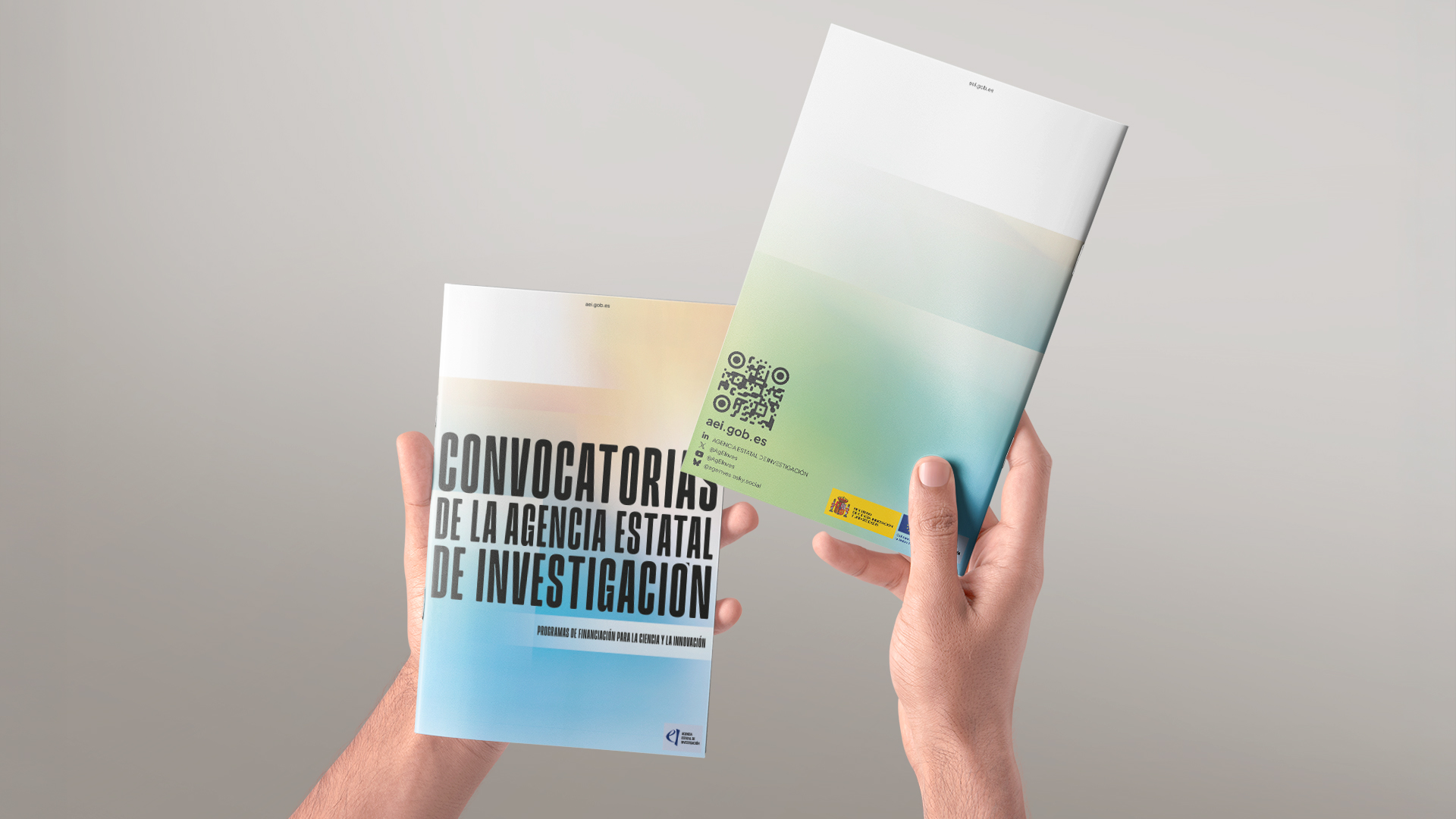
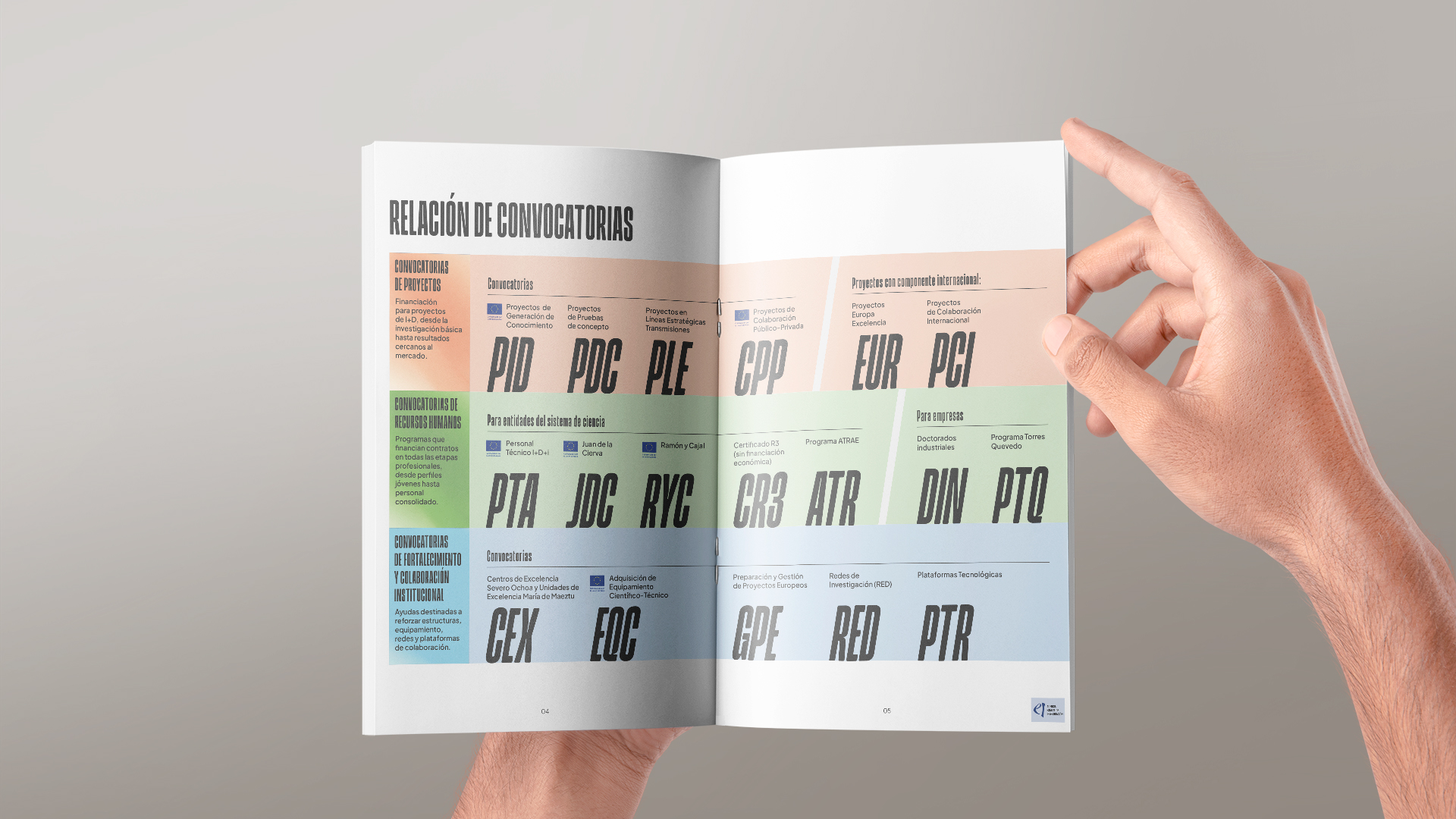
To achieve this, we worked on content architecture, textual hierarchy, and message simplification, while maintaining the technical rigour of the information. The dossier is structured to organise the funding schemes into three main categories—research projects, human resources, and institutional strengthening and collaboration—and includes explanatory sheets for each call, highlighting their objectives, scope, and distinctive features.
graphic design
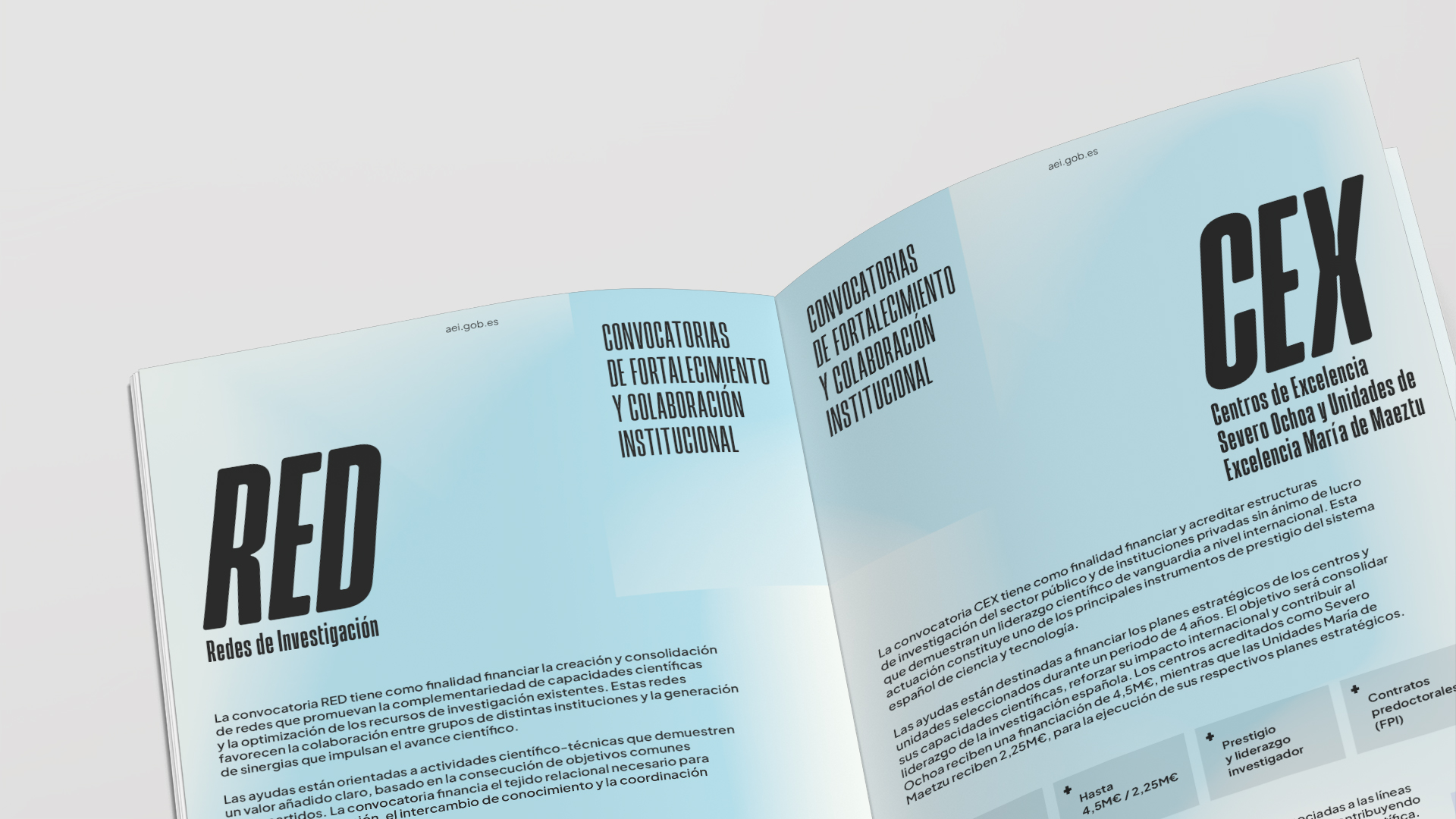
We developed a graphic proposal with a strong visual focus, designed to bring identity, rhythm, and clarity to the content. The piece combines a structured layout with high-impact graphic resources, bold headlines, colour coding, and quick-read modules that help identify categories, calls, and key messages. This approach is evident throughout the dossier, where opening pages, thematic blocks, call sheets, and visual highlights are interwoven.
The design fulfils not only an aesthetic function but also a strategic one: it improves navigation, enhances information retention, and transforms an institutional publication into a more accessible, dynamic, and understandable piece. The result is a dossier that translates complexity into visual order, strengthening AEI’s ability to communicate the scope of its funding programmes more clearly.